


Why Self-Love Leads to Better Singing

Singing is one of the most natural and joyful expressions of being human. From lullabies to anthems, sacred chants to karaoke nights, singing connects us — to ourselves, to each other, and to something much greater. Yet for many people, the idea of singing brings up fear, shame, or self-criticism.
We tell ourselves we “can’t sing,” we cringe when we hear our own voice, or we compare ourselves to others who seem to “have it naturally.” But what if the real key to better singing isn’t about technique, talent, or even practice alone — but self-love?
When we begin to treat our voice with kindness, patience, and curiosity, something extraordinary happens. Our sound opens up. Our confidence grows. Our ability to connect — both emotionally and physically — deepens.
This article explores how self-love transforms not just your singing, but your whole relationship with your voice.

Self-Love Puts Vocal Health Above Aesthetics
In a world where image and perfection often take centre stage, singers can fall into the trap of chasing “the perfect sound.” But true vocal mastery — and vocal freedom — come from a place of care rather than control.
When you love and respect yourself, you naturally begin to prioritise vocal health over how “pretty” or “powerful” you sound.
Self-Love Reminds You:
Your voice is part of your body, not separate from it.
You deserve to sing without pain, strain, or fatigue.
The healthiest voice is the most sustainable voice.
A singer who values self-care will warm up, rest when tired, stay hydrated, and seek balance between effort and ease. This isn’t indulgence — it’s wisdom.
As many professional singers learn the hard way, neglecting vocal health for the sake of sounding “impressive” leads to problems: hoarseness, loss of range, tension, and even long-term injury. But self-love shifts the focus: instead of pushing, you start listening — to your body, your breath, and your emotions.
“The voice doesn’t respond to criticism — it responds to compassion.”
When you cultivate self-love, your body relaxes. Your breath flows. Your vocal cords vibrate more freely. And ironically, when you stop chasing perfection, your voice becomes more beautiful than ever before.
Enjoyment Over “Sounding Bad” — Why a Good Vocal Coach Doesn’t Focus on Sounding “Good”
Many people hesitate to sing because they’re afraid of “sounding bad.” That fear is one of the biggest barriers to vocal freedom — and it’s rooted in judgment, not joy.
The truth is, “good” and “bad” are subjective labels. What one person finds beautiful, another might not. And in contemporary music, some of the most distinctive, emotive voices — like Bob Dylan, Billie Eilish, or Florence Welch — don’t fit traditional definitions of “good technique.” Yet they move us deeply.
Why an Effective Vocal Coach Won’t Focus on “Good” or “Bad”
A skilled vocal coach helps you:
Explore your natural tone, rather than mimic someone else’s.
Remove unhelpful habits that block expression and harm your voice.
Build awareness and coordination — not ego-driven control.
Reconnect with your authentic voice.
An effective coach celebrates the process alongside the product. Singing isn’t about sounding perfect; it’s about communication and self-expression without creating habits that impede your vocal health.
Self-love means giving yourself permission to sound however you sound today. To experiment. To explore. To laugh when it cracks or warbles. Because joy — not judgment — is what creates real improvement.
When you enjoy singing, your nervous system relaxes. Your breath deepens. Your tone opens up. This physiological shift is huge — because tension is the enemy of resonance.
“Every time you sing with love instead of fear, your voice thanks you by expanding a little more.”
So next time you find yourself thinking, “I sound awful,” pause. Smile. Then ask, “Am I enjoying this?” Because enjoyment — not approval — is the real measure of progress.
Reconnecting With Your Body, Inner Voice and Emotions
Your voice is a direct reflection of your inner world. It mirrors your physical state, your emotions, your beliefs, and even your relationship with yourself.
When you’re disconnected from your body, you’re disconnected from your sound. And when you’ve been taught to suppress emotion — to “stay quiet,” to “be good,” to “not make a fuss” — that suppression can literally live in your voice.
Self-Love Helps You Reconnect:
With your body — noticing where tension lives (jaw, throat, shoulders) and gently releasing it.
With your breath — feeling the rhythm and power of your own life force.
With your emotions — allowing your voice to express joy, sadness, anger, longing, and everything in between.
Singing becomes a form of healing — a dialogue between your inner and outer worlds.
When you approach your practice from a place of love, you’re not “fixing” your voice. You’re listening to it. You’re creating safety within yourself to express what’s real.
And that safety allows your voice to flourish.
“The moment you stop trying to control your voice and start listening to it, you begin to heal — not just as a singer, but as a human being.”
Many people discover during vocal coaching that the tension in their voice isn’t just muscular — it’s emotional. Self-love helps you hold space for those emotions instead of judging them. When you release emotional blocks, your tone, range, and stamina often improve naturally.
Self-Expression: Singing as a Mirror of the Soul
At its core, singing is self-expression — and self-expression requires self-acceptance.
You cannot fully express what you’re unwilling to feel. You cannot share your truth if you’re ashamed of it.
Self-love opens the doorway to authentic expression.
Instead of trying to sound like your favourite artist, you begin to sound like you. Instead of hiding behind perfection, you show up with presence.
When You Sing with Self-Love:
You express, rather than perform.
You share, rather than prove.
You connect, rather than compete.
This shift transforms everything. Listeners respond not just to your notes, but to your energy. People can feel when you’re singing from your heart rather than your head.
“When you sing from love, your voice becomes medicine — for you and for others.”
And that’s not poetic exaggeration. Studies in neuroscience and psychology show that singing releases endorphins, oxytocin, and dopamine — the “feel good” hormones that promote connection and healing.
When your intention is self-expression, not perfection, singing becomes a spiritual practice. You rediscover parts of yourself that words can’t reach.
Singing With Others Creates Trust and Bonding
One of the most profound experiences of self-love through singing happens when we sing together.
Group singing — whether in a choir, workshop, or retreat — is a powerful way to dissolve fear, foster connection, and build trust.
When we harmonise with others, our heartbeats literally begin to synchronise. Breathing in unison regulates the nervous system and builds oxytocin — the hormone of trust and connection.
The Benefits of Group Singing:
Reduces anxiety and stress levels.
Increases feelings of belonging and self-worth.
Builds empathy and compassion.
Strengthens emotional resilience.
Singing with others requires vulnerability. You have to be heard. But when surrounded by love, acceptance, and non-judgment, that vulnerability becomes liberation.
Self-love in this context means allowing yourself to be part of something greater — to contribute your unique sound to a shared experience.
“In a circle of singers, there’s no hierarchy — only harmony.”
When you experience that kind of musical unity, something within you shifts. The inner critic softens. The heart opens. And suddenly, your voice feels like it belongs again — not just in the world, but within you.
Healing the Inner Critic Through the Voice
The inner critic is one of the biggest barriers to vocal and personal growth. It whispers:
“You don’t sound good enough.”
“You’ll embarrass yourself.”
“Who do you think you are to sing?”
But that voice isn’t truth — it’s conditioning. It’s the echo of moments when you were told to “be quiet,” or laughed at for how you sounded.
Self-love doesn’t silence the critic by force. It soothes it with understanding.
When you practice compassion for yourself — when you sing for the joy of it rather than the approval of others — you start to dismantle those old beliefs. You prove to yourself that your voice deserves space.
Singing becomes a gentle rebellion against shame. Every note becomes a declaration of worthiness.
“Your voice doesn’t need permission to exist — it already does. Self-love just turns up the volume.”
The Science of Singing and Self-Love
From a scientific perspective, the link between self-love and vocal performance is profound.
When we engage in negative self-talk, our bodies respond with tension and stress hormones. Cortisol levels rise, breathing becomes shallow, and vocal folds tighten. This creates the exact opposite of what good singing requires: freedom, flow, and flexibility.
Conversely, when we approach singing with curiosity and self-compassion, the body enters a state of rest and repair — the parasympathetic nervous system activates. This allows for:
Deeper, more efficient breathing.
Better vocal fold vibration.
Improved resonance and tone.
Greater endurance.
In other words, self-love isn’t just a mindset — it’s a physiological advantage.
Singers who love their voices tend to stay healthier, progress faster, and enjoy their practice more. They take time to rest, hydrate, warm up, and recover. And their voices reflect that care in every sound they make.
Practical Ways to Cultivate Self-Love in Your Singing
Self-love doesn’t mean ignoring technique — it means approaching technique from a place of compassion and curiosity.
Here are some ways to begin integrating self-love into your singing practice:
💗 1. Start with Gratitude
Before you sing, take a deep breath and thank your voice for being there — even if it feels tired, croaky, or unpredictable. Gratitude grounds you in the present moment.
💗 2. Release Judgment
If you catch yourself thinking “that sounded bad,” replace it with “that’s interesting — what’s my body doing?” Curiosity transforms criticism into awareness.
💗 3. Warm Up with Intention
Don’t rush your warm-up. Use it as an act of self-care — a way to wake up your body and voice gently.
💗 4. Connect with Emotion
Choose songs that mean something to you. Let the lyrics resonate. Feel, rather than perform.
💗 5. Rest Without Guilt
If your voice feels fatigued, resting is progress — not failure. Healing and growth happen in recovery.
💗 6. Sing with Others
While some people feel uncomfortable singing in front of others, singing in a facilitated and supportive group helps to build self confidence. Allow yourself to experience the joy of shared sound and connection.
💗 7. Celebrate Every Step
Whether you’ve released tension in one note or found courage to sing in front of others — celebrate it. Progress in singing is progress in self-love.
The Ripple Effect: When Loving Your Voice Changes Everything
When you start to love your voice, something beautiful happens: you begin to love other parts of yourself, too.
Your voice is an instrument of truth — and when you honour it, you start to honour your needs, your emotions, and your boundaries.
You stop over-apologising. You speak with confidence. You sing with freedom.
And you begin to attract experiences that reflect that newfound self-worth.
Many people who attend singing for wellbeing retreats or vocal healing sessions describe the experience as life-changing. They come to sing — but they leave with something deeper: a sense of belonging to themselves again.
Because self-love doesn’t just improve your singing. It transforms your entire relationship with expression, confidence, and connection.
Singing as a Path Back to Yourself
Singing isn’t just about producing sound. It’s about being seen, being heard, and being whole.
When you approach your voice with love — instead of fear, judgment, or comparison — you create space for true growth. You rediscover your natural tone, your emotional depth, and your capacity for joy.
So whether you sing in the shower, on stage, or at a retreat, remember:
“Your voice isn’t waiting to be perfect — it’s waiting to be loved.”
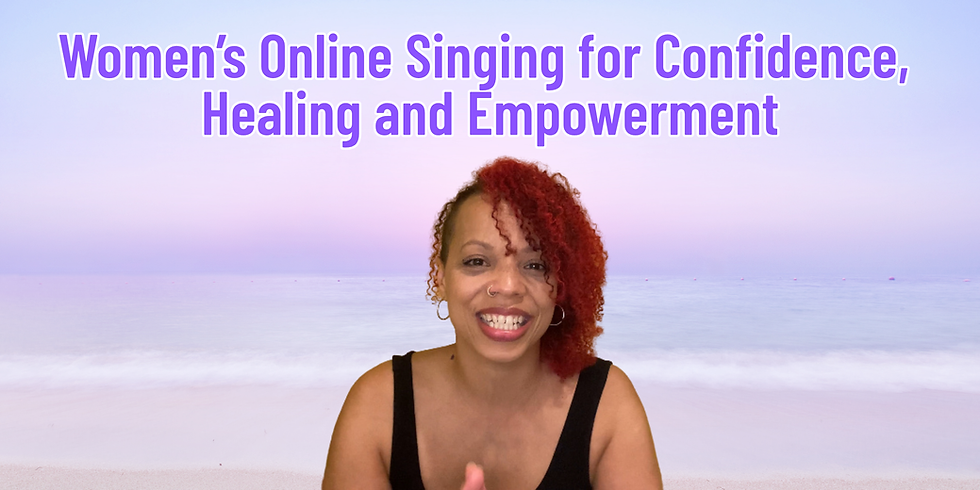
Ready to make a loving connection with your voice and reclaim your power? Join my upcoming Singing for Confidence, Healing and Empowerment trail session on Tuesday 11th of November 7pm-8pm UK time. Reserve your spot here: https://bit.ly/Sing2Heal


Comments